


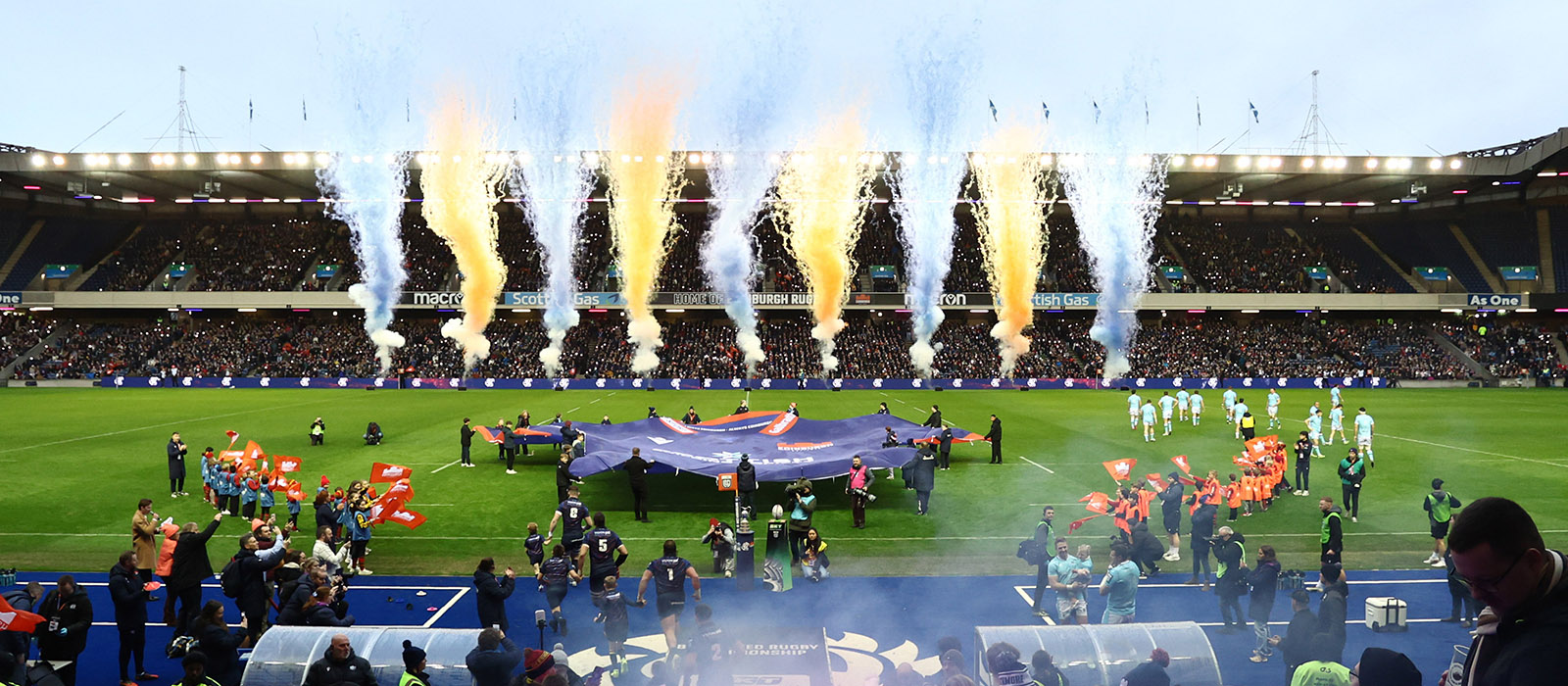
The first derby took place on 23 November 1872 when Glasgow District met Edinburgh District at Burnbank, home of Glasgow Academicals RFC. The match — played by teams of 20-a-side — was won by an Edinburgh drop-goal to nil.
Known as the ‘Inter-City’ derby, the fixture was initially played twice a season until 1876 and then annually thereafter. In the 2007/08 season, the fixture was revived and rebranded by Glasgow Warriors and Edinburgh Rugby as the 1872 Cup, marking the date of that first historic match and connecting the professional clubs to their amateur district origins.
Why 1872?
1872 is the recorded year of the oldest inter-city rugby match in the world between the original Glasgow and Edinburgh district sides, the same match on which the modern professional clubs were later founded. The 1872 Cup keeps that legacy alive.
The Trophy
The 1872 Cup trophy stands as a lasting symbol of Scotland’s oldest rugby rivalry representing more than 150 years of competition, pride and sporting heritage between Glasgow Warriors and Edinburgh Rugby.

First introduced when the competition was revived in 2007/08, the trophy’s design pays tribute to the original Inter-City fixture played in 1872. Crafted to reflect the strength and tradition of both clubs, it connects the professional era with the amateur roots of Scottish rugby.
Each year, the names of the winning team are engraved on the base of the trophy, a permanent reminder of the passion, intensity and history that define this fixture. For players and supporters alike, lifting the 1872 Cup is about more than victory on the pitch, it’s about claiming the bragging rights of Scotland’s rugby heartlands.
Modern format
Today the 1872 Cup is decided over two fixtures between Glasgow Warriors and Edinburgh Rugby, incorporated into the BKT United Rugby Championship schedule. The derbies carry huge local pride as well as valuable league points.
The legacy
Each 1872 Cup fixture connects modern professional players, clubs and supporters to more than 150 years of Scottish rugby history. The Cup is as much about honour and regional pride as it is about competition. It’s a fixture that always brings extra sparkle to the URC calendar, and the festive fixture has become a staple for people’s Twixmas.