Sampson relishing fresh start as Edinburgh’s attack looks to find ‘space as quick as possible’
11 Aug 2026New Edinburgh Rugby Attack Coach Tim Sampson knew Edinburgh before Edinburgh knew him.



New Edinburgh Rugby Attack Coach Tim Sampson knew Edinburgh before Edinburgh knew him.
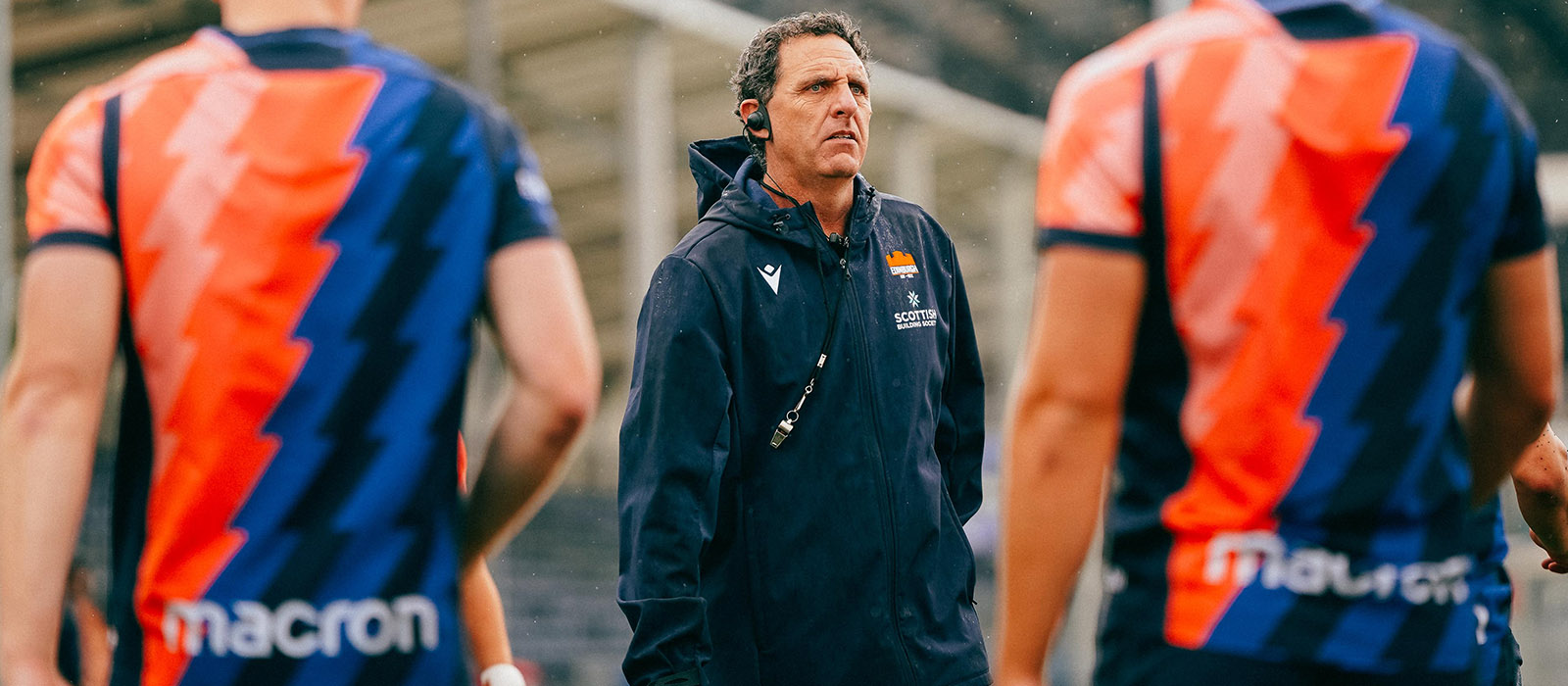
Long before he had a desk in the coaches’ office, he’d been a visitor here – a rugby man drawn back to the city again and again, first as a player travelling through, later with his wife on trips away from a few years living in Ireland.
When the call eventually came to make it permanent, the decision barely needed thinking about.
“I’ve always loved Edinburgh,” he says. “A beautiful city and the people are very welcoming. Edinburgh Rugby is a world-renowned club with a lot of history, so it ticked all the boxes for me.”
After eight years in Super Rugby, taking in Western Force, the Melbourne Rebels and, most recently, Fijian Drua, Sampson had long had one eye on this side of the world.
Coaching in the URC, he says, is something he’d always wanted to do – and when Sean Everitt and Douglas Struth began talking him through where the club was heading, the pull only grew stronger.
“What really attracted me was where the club is heading – the make-up of the squad, the blend of good experienced players with youth coming through, which excites me as the attack coach.”
He arrived in early July, in among the first wave of pre-season, and hasn’t slowed down since.
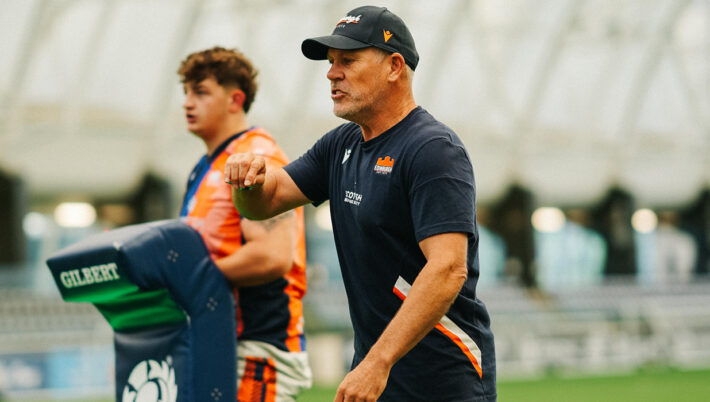
A house sorted before he’d even landed, he was straight into training with the rest of the group from day one. Three weeks in, the mood around Hive Stadium has struck him as much as anything else.
“There’s been a lot of change throughout the organisation, and I think it’s brought fresh energy into the place. We always respect the people who’ve been here before us, but there’s been real growth in the three weeks we’ve been in already. It’s pre-season and we haven’t played yet, but the appetite from staff and players to kick on is really encouraging.”
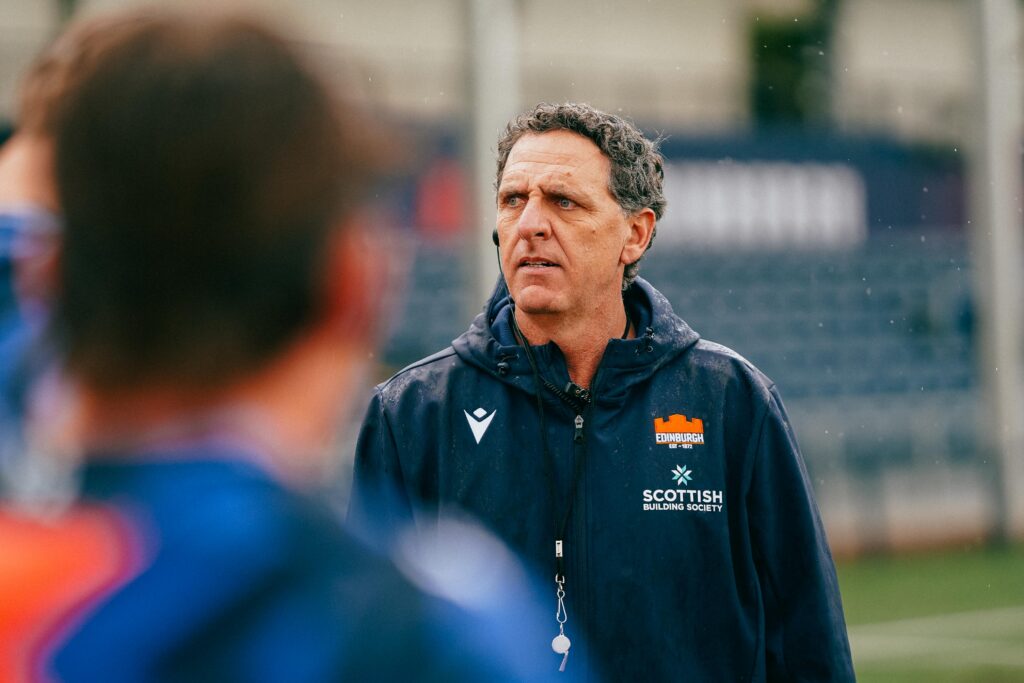
That appetite is exactly what Sampson has been tasked with sharpening into points on the board.
Edinburgh’s attack fell short of its potential last season, and it’s the area he’s spent his first weeks picking apart – not by tearing anything down, but by identifying where hard-won territory went to waste.
“I’ve watched a fair bit of footage on Edinburgh and they scored some really good long-range tries, so I genuinely believe there’s high skill in this squad,” he explains.
“The big area to work on, and the players are well aware of this, is when we get into good attacking positions and territory, capitalising on the hard work it took to get there – especially in the attacking 22. Once we’re in there, it’s about finishing the job.”
It’s a theme he keeps returning to: the talent is there, the finishing has to catch up. Alongside Defence Coach Brad Davis, he’s identified a pack with real skill through the middle of the field – forwards comfortable in tight spaces with ball in hand – and a job to be done in freeing up the space around them.
“There are some really highly skilled forwards through the middle of the field with a good short passing game, and I want to build on that – working out how we unlock our attack and create one-on-one opportunities to free up space elsewhere on the pitch.”
Ask Sampson what he’s building and the answer comes quickly: space, and how fast you can find it.
“I promote heavily on space – how we get to the edge as quickly as possible, whether that’s through passing, running or kicking to find it,” he says. “It is a bit of a different style from where I’ve come from, but coming in as a new coach, it’s about understanding what makes these guys tick and how they want to play, then putting my footprint on it.”
That process starts with the players who’ll run it – Edinburgh’s young halfbacks, tasked with more responsibility than their years might suggest. Sampson has made it clear from the outset that he wants to hear from them, not just direct them.
“I’m encouraging the younger guys to speak up more in meetings – our 9s and 10s need to talk more, and that’ll transfer onto the field. There’s talent there and we’re going to see growth, because they’re training exceptionally well.”
He’s spent hours already working through detail with Ross Thompson – speed through the hands, when to take the ball to the line and when to shift it early – convinced the raw materials of a top-class 10 are already there.
“The potential’s there and we’ve got to fulfil it. He’s a young fly-half and we can’t ignore that – it takes time in that position, but there are good signs. He’s mixing things up well and changing our point of attack nicely at training.”
And then there are the weapons Sampson doesn’t need to develop so much as unleash. Duhan van der Merwe and Darcy Graham, two of the most dangerous finishers in the URC, sit at the sharp end of everything he’s building.
“There’s weapons there, and that’s our job – to get them the ball,” he says.
“Darcy’s a real instinctive outside back who creates something from nothing, and Duhan’s that big, powerful winger every team craves, who can also create something out of nothing. They’re proven on the international stage, and it’s my job and the players’ job to use those weapons and get the ball into their hands.”
Three weeks in, the picture is still forming. But the direction is clear enough – find the space, trust the halfbacks to find it quickly, and put the ball in the hands of players capable of finishing what the rest of the team started.
Sampson has been here before, in the sense that he’s walked into evolving clubs before – Western Force in the aftermath of Super Rugby cuts, the Rebels through their own upheaval.
What’s different this time, he says, is the feeling in the building.
“Wherever you go next, the environment has to be an enjoyable one,” he reflects. Fiji gave him that. Edinburgh, so far, has too.
 URC
Three from three: Edinburgh secure bonus-point win in Parma
Sat 10 Oct 2026
URC
Three from three: Edinburgh secure bonus-point win in Parma
Sat 10 Oct 2026
 URC
Ashman to start against Zebre Parma
Thu 8 Oct 2026
URC
Ashman to start against Zebre Parma
Thu 8 Oct 2026
 URC
McHaffie seals Stormers win on home debut
Fri 2 Oct 2026
URC
McHaffie seals Stormers win on home debut
Fri 2 Oct 2026
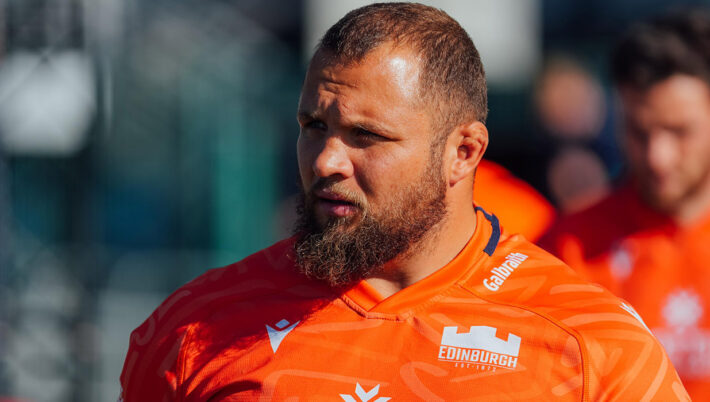 URC
Schoeman returns for home opener
Thu 1 Oct 2026
URC
Schoeman returns for home opener
Thu 1 Oct 2026
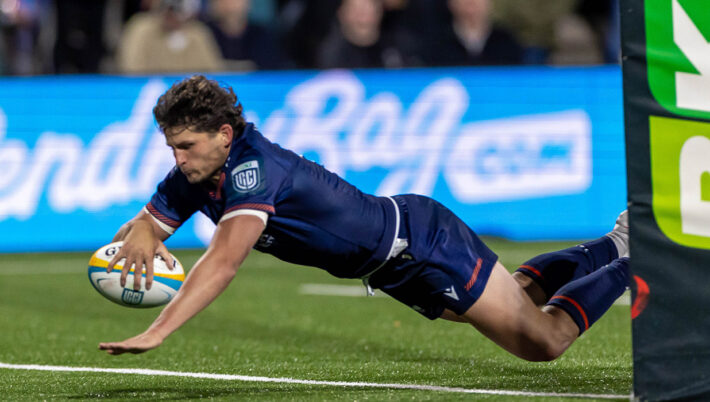 URC
Next up: DHL Stormers
Sun 27 Sep 2026
URC
Next up: DHL Stormers
Sun 27 Sep 2026
 URC
Five points on the road as Edinburgh hold off Ulster in Belfast
Fri 25 Sep 2026
URC
Five points on the road as Edinburgh hold off Ulster in Belfast
Fri 25 Sep 2026
 URC
Four debutants to start against Ulster
Thu 24 Sep 2026
URC
Four debutants to start against Ulster
Thu 24 Sep 2026
 URC
Impressive Edinburgh beaten at The Stoop in pre-season finale
Sun 20 Sep 2026
URC
Impressive Edinburgh beaten at The Stoop in pre-season finale
Sun 20 Sep 2026
 URC
Scotland quartet return for Quins friendly
Thu 17 Sep 2026
URC
Scotland quartet return for Quins friendly
Thu 17 Sep 2026
 URC
Behind the scenes: Doyle and Lindsay make their mark
Mon 14 Sep 2026
URC
Behind the scenes: Doyle and Lindsay make their mark
Mon 14 Sep 2026
 URC
Ulster edge eight-try thriller against youthful Edinburgh
Fri 4 Sep 2026
URC
Ulster edge eight-try thriller against youthful Edinburgh
Fri 4 Sep 2026
 URC
New recruits named for Scottish Building Society pre-season friendly
Thu 3 Sep 2026
URC
New recruits named for Scottish Building Society pre-season friendly
Thu 3 Sep 2026
 URC
Time is running out: secure your 2026/27 season ticket
Fri 28 Aug 2026
URC
Time is running out: secure your 2026/27 season ticket
Fri 28 Aug 2026
 URC
Edinburgh Rugby vs Ulster: Everything you need to know
Wed 26 Aug 2026
URC
Edinburgh Rugby vs Ulster: Everything you need to know
Wed 26 Aug 2026
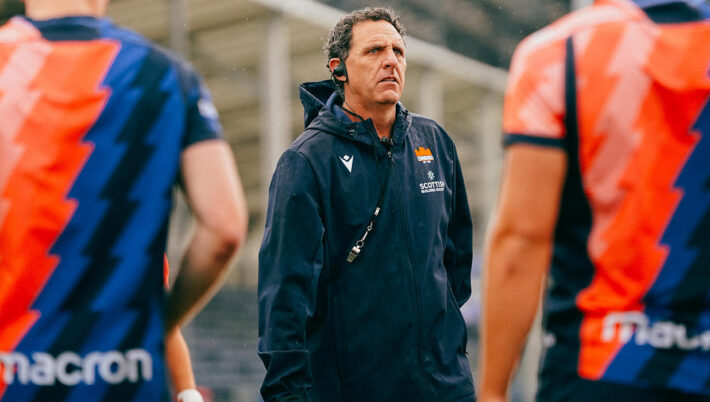 URC
Finding space: Behind the scenes with Tim Sampson
Sun 16 Aug 2026
URC
Finding space: Behind the scenes with Tim Sampson
Sun 16 Aug 2026
 URC
1872 Cup tickets on sale now!
Fri 14 Aug 2026
URC
1872 Cup tickets on sale now!
Fri 14 Aug 2026
 URC
1872 Cup tickets on sale this Friday!
Wed 12 Aug 2026
URC
1872 Cup tickets on sale this Friday!
Wed 12 Aug 2026
 URC
Finding his feet: Behind the scenes with James Grayson
Fri 7 Aug 2026
URC
Finding his feet: Behind the scenes with James Grayson
Fri 7 Aug 2026
 URC
Leading the defence: Behind the scenes with Brad Davis
Mon 3 Aug 2026
URC
Leading the defence: Behind the scenes with Brad Davis
Mon 3 Aug 2026
 URC
Davis relishing ‘huge opportunity’ as Defence Coach settles in
Fri 31 Jul 2026
URC
Davis relishing ‘huge opportunity’ as Defence Coach settles in
Fri 31 Jul 2026